
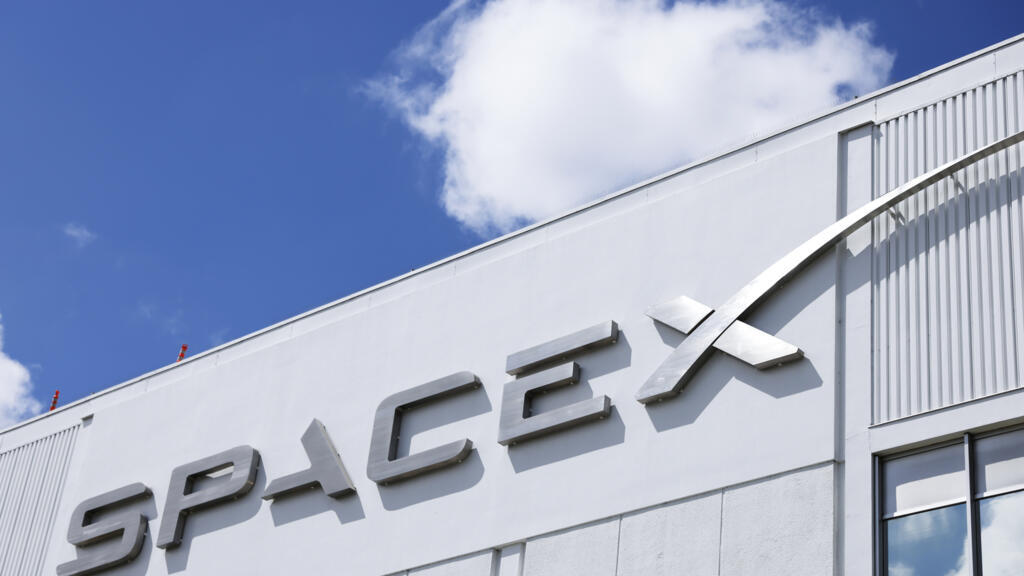
SpaceX is moving toward a public-market debut so large that it is less a routine listing than a stress test for the growth-stock complex. The company is aiming to raise up to $75 billion in an initial public offering expected next week, according to Reuters, in a deal that would value Elon Musk’s rocket, satellite and artificial intelligence business at roughly $1.75 trillion. If completed at that scale, the offering would become the largest IPO on record and would arrive as investors are already questioning how much speculative enthusiasm can be absorbed by a market crowded into technology winners.
The timing matters. Reuters reported Friday that pricing is expected on June 11, with trading on Nasdaq expected to begin the following day. The update followed a June 3 amended registration statement filed with the Securities and Exchange Commission, which listed the filing as an S-1/A and showed the IPO process entering a more concrete stage. Associated Press reported that SpaceX plans to sell 555.6 million shares at $135 each, while Axios calculated that the offering would value the company at about $1.77 trillion at that price. The exact valuation may vary slightly by source and share-count assumptions, but the financial signal is unmistakable: SpaceX is asking public investors to underwrite one of the most ambitious capital raises ever attempted.
That request lands in a market that has recently rewarded companies tied to artificial intelligence, data infrastructure and scarce technology platforms, but has also become less forgiving. On Friday, Reuters reported that the Nasdaq fell sharply after stronger employment data revived concerns that the Federal Reserve could remain restrictive or even turn more hawkish. The same report noted that semiconductor shares were under pressure after Broadcom’s results failed to satisfy elevated expectations. SpaceX is therefore asking whether investors still have enough appetite for long-duration growth stories after a powerful rally has already pushed valuations high.
The company gives both bulls and skeptics material to work with. Reuters said SpaceX generated $18.67 billion in revenue in 2025, up 33% from the prior year, while posting a net loss of $4.94 billion. Associated Press separately reported that the filing showed an operating loss of $2.6 billion last year on $18.7 billion of revenue. Those numbers do not support a simple mature-company valuation case. They instead point to a business where scale, strategic importance and optionality are being priced far ahead of conventional earnings visibility.
For investors, the central question is whether SpaceX should be treated like a space infrastructure platform, a technology company, a defense-adjacent aerospace supplier, an AI beneficiary, or some combination of all four. Starlink gives the company recurring connectivity revenue and a clearer commercial model than launch services alone. Its rocket business gives it an operating position that few competitors can match. But the AI and orbital computing narrative adds a more speculative layer, because public investors will have to decide how much value to assign to future projects that remain difficult to benchmark against existing public companies.
Governance will also be part of the valuation debate. AP reported that Musk’s voting power would come primarily through Class B shares carrying 10 votes each and that the filing showed he would control more than 80% of the company’s voting power. Founder control is not unusual among high-growth technology listings, but the size of SpaceX’s proposed valuation makes the issue more important. Investors may be willing to pay for Musk’s ability to move quickly across capital-intensive projects, yet they will also be buying into a structure where outside shareholders have limited practical influence.
The broader market implication is that SpaceX could either validate the current appetite for mega-cap growth or expose its limits. A strong reception would likely reinforce demand for future AI and technology listings. A weak or volatile debut would send a different message: even the most recognizable private company in the world must face valuation discipline when losses are large, rates are uncertain and investors are already heavily exposed to the growth trade.
That is why the IPO is bigger than SpaceX. It is a referendum on whether public markets still want to finance frontier ambition at almost any price, or whether the next phase of the AI and infrastructure boom will require clearer proof that scale can become durable cash flow. SpaceX has the brand, the strategic assets and the scarcity value. Next week will show how much of that public investors are willing to capitalize before the business has fully proven the economics behind the story.